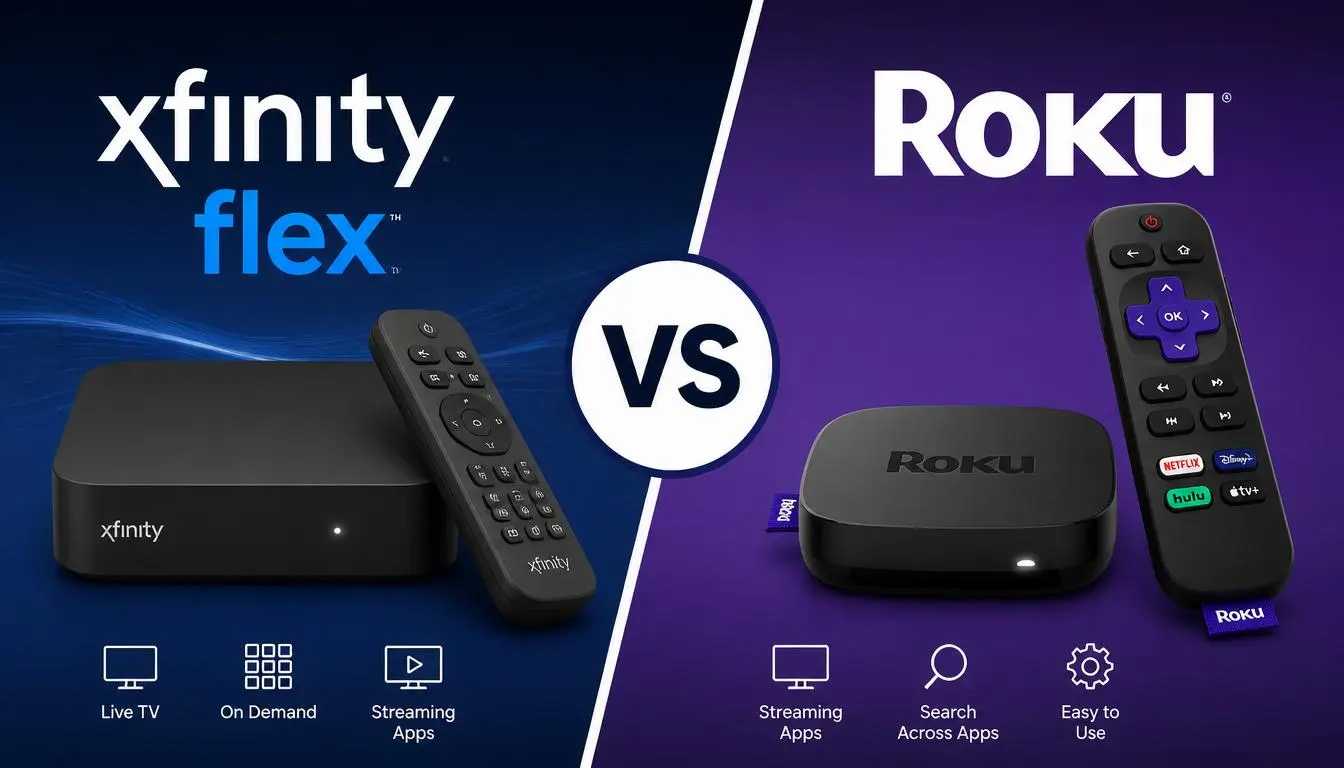
In recent times, users have certain choices in terms of streaming platforms for content, clarity, cost, app accessibility, and features. They are now tired of paying high bills, getting limited app access, and being unable to clarify their entertainment installation. They are a bit confused about selecting the perfect streaming device for their home entertainment. No need to worry. There are two key streaming platforms, Xfinity Stream Box vs Roku, in terms of features, cost, content, functionality, and association with other services. Xfinity Flex requires a $15 one-time setup fee for new users and is free of cost. Extra boxes are available at $5 per month. Roku costs between $30 to $100 per month with no extra device charges. This article details the major differences between Roku vs Xfinity.
Why Xfinity Flex vs Roku?
Xfinity Flex, alongside Roku serve as a premier streaming device in the current global market. This Flex 4K streaming device provides the best HD content and an easy-to-use interface to Xfinity Internet Service customers. Users benefit from accessing different streaming platforms as well as on-demand content from Xfinity through its interface.
Roku provides its service starting at $30 per month with a larger selection of apps, together with hardware flexibility for multiple devices. Each device provides the capability for 4K streaming alongside voice command features. Customers receive better compatibility with Xfinity services from Xfinity Flex, yet Roku vs Comcast provides users more adaptable customization options. Among the key differentiations between Xfinity Flex vs Roku, users can choose the appropriate streaming device based on their needs and budget.
Comparison Between Roku vs Comcast
| Feature | Xfinity Flex | Roku |
|---|---|---|
| Starting Price | $0 per month and additional boxes cost $5 per month | $30 to $100 per month |
| Video Quality | Up to 4K UHD | Up to 4K UHD |
| Remote | Voice Controlled Remote | Voice Remote (on some models) |
| Content Library | Over 10,000 titles | Over 400,000 movies and TV episodes |
| User Interface | Slightly complex | Clean and user-friendly |
| App Selection | Limited | Extensive |
| Device Compatibility | Limited to the Xfinity ecosystem | Wide range of TVs and devices |
| Customization | Limited | Highly customizable |
| Smart Home Integration | Yes (for Xfinity Home customers) | Limited |
| Platform Independence | Requires Xfinity Internet | Works with any internet provider |
Xfinity Flex integrates with the Xfinity platform and combines all streaming content through an aggregated interface. Roku vs Comcast Flex delivers a broader application selection, together with heightened customization potential and stands independent from any platform. The selection of a Roku or Xfinity streaming box depends on personal requirements, along with subscribers’ current programs, and their preference between streaming limitations. So, no other can be an Xfinity Flex replacement because it offers a free streaming service to Xfinity Internet subscribers.
Xfinity Flex vs Smart TV
Xfinity Flex is an alternative and employed streaming portal of Comcast, while a smart TV has broadcasting apps available built into the operating system without requiring hardware. With Xfinity Flex, you can access Xfinity router settings, a library of free and ad-based content and free Xfinity camera feeds. Users can plug it into their TV’s HDMI port. It is free for a new streaming box, but charges $5 per month for extra boxes like the Xumo Stream box. They can access a high-quality voice remote, pre-designed to manage your TV’s power and volume.
Roku functions freely with a cable and Internet provider box. Attach the TV to your home WiFi and download the apps you need like Amazon Prime Video, Netflix and Hulu. This interface is built into operating systems such as Roku TV, Google TV, etc. This integrates your TV setup into a single remote. The software becomes slow for app updates over time.
Is Xfinity on Roku Free?
For users, the Xfinity TV app is not free on Roku. You can install and download the Xfinity Stream app for free on Roku devices. This needs an active subscription to Xfinity TV to stream its content. Without a subscription, viewing of Xfinity app content is not possible, despite its installation on a Roku box.
Xfinity Flex – The Comcast Streaming Solution
Xfinity Flex entered the market just 9 years ago through Comcast. The streaming device, offered free to Xfinity Internet customers, transitioned to become a paid service.
Features
Xfinity Flex TV box provides users with various compelling features, among them.
- The device allows users to watch 4K Ultra High Definition content, which delivers flawless images.
- The XR15 Voice Remote provides Voice Control functionality to users who want to search content through voice commands.
- Flex provides an integrated guide feature that combines streaming service content into one interface so customers can quickly find new shows and movies.
- Customers under Xfinity Home Internet service can link their smart home devices to Flex for remote control functions.
- The content library contains more than 10,000 free movies and shows accessible to users.
Pricing
The free service of Xfinity Flex is provided by the Xfinity Internet plan. Customers can now access these new prices for Flex service.
- $15 per month one-time installation fee for new users.
- $5 per month for additional Xfinity Flex TV streaming boxes.
Roku – The Versatile Streaming Pioneer
Roku launched in 2008 to become a leading choice for customers who cut their cable services because of its varied devices alongside its large selection of streaming apps.
Features
You can find multiple functions in Roku devices.
- The 4K HDR streaming functionality comes standard in numerous models from the Roku lineup to provide viewers with advanced picture quality.
- Roku enables users to access 400,000 different movies and TV shows that stream through multiple entertainment providers.
- Voice Remote functions are standard on advanced Roku models through their device remotes equipped with voice command controls.
- Users choosing Roku do not face restrictions on their internet Service provider choice like those who use Xfinity Flex.
- Roku provides options between streaming sticks and set-top boxes, along with multiple devices that serve users with different financial capacities.
Pricing
The costs of Roku boxes depend on the model a user chooses.
- Roku Express – starting at $29.75.
- Roku Streaming Stick+ – starting at $44.99.
- Roku Ultra – starting at $93.005.
Xfinity Flex vs Roku – Head-to-Head Comparison
Both services will be compared on multiple essential aspects throughout this analysis.
- Content Availability – Roku leads the market when it comes to providing content, with over 400,000 movies and TV shows, whereas Roku vs Xfinity Flex offers only 10,000+ selections. Roku provides content availability through its platform openness, which enables users to access many different apps and services.
- User Interface – Users praise Roku for its clear and easy-to-use interface design, despite similar user-friendly features found on Xfinity Flex. The interface of Xfinity Flex provides users with a functional system, but its complexity level exceeds that of other competitors in this field.
- Device Compatibility – Roku provides an extensive selection of devices that connect to TVs and internet services from any provider. Xfinity Flex operates exclusively for subscribers of Xfinity Internet.
- Price – Roku maintains a price advantage over Xfinity Flex, given that the Xfinity streaming device now has negative free status. Customers find Xfinity Flex device pricing affordable because it starts from $29.755 and extends to multiple options that suit different budgets.
- Customization – Each Roku device permits users to pick their preferred selection of applications or remove them at their convenience. Xfinity Flex provides restricted functions for designing the app interface.
- Smart Home Integration – These devices allow customers to link their smart home systems through their respective interfaces. Users who have Xfinity Home services gain maximum integration and the Xfinity Stream app compatibility from Xfinity Flex, although Roku provides simple integration across various Roku smart home devices.
Which One Should You Choose?
The selection between Roku vs Xfinity Flex happens because each device fulfills different requirements of users.
Choose Xfinity Flex if
- You are qualified to receive Xfinity Flex because you already subscribe to Xfinity Internet.
- Customers who prefer to watch all their Xfinity services through a single integrated interface can move with this device.
- Your choice for the best streaming box for Xfinity Internet users is mainly based on getting streaming content from Xfinity to your preference.
Choose Roku if
- Your top priority is having full access to multiple streaming applications through different services.
- Your customizable streaming approach guides you toward Xfinity Flex or a different streaming device.
- Internet service provider limitations do not apply to you.
- Your current requirements include finding cheaper alternatives.
Final Thoughts
The streaming environment provides Xfinity Flex vs Roku for seniors as two effective options for customers who want to cut their cable television subscription. Xfinity Flex delivers a cohesive experience because it seamlessly combines with all Xfinity systems for its subscribers. Streaming enthusiasts choose Roku devices because of their broad selection of gadgets as well as their extensive collection of apps and budget-friendly prices. To learn more about internet and TV packages, call the Club HDTV.
FAQs
Ans. Yes, Xfinity Flex offers a free streaming service on its first box for those who have Xfinity Internet-only plans. Extra streaming boxes cost $5 monthly each for only two of them and a one-time activation or installation charge of up to $15.
Ans. No, you don’t require a Roku if you have access to Xfinity previously. This supports smart streaming apps. However, accessing a Roku can be an excellent method to activate Xfinity without funding additional rental charges for a cable box.